


Maya was the kind of person managers loved.
She answered emails fast. She kept her files clean. She remembered dates other people forgot. If a meeting started at nine, she joined at eight fifty-seven. If a report was due Friday, she sent it Thursday night. If a client asked for one version, she made three.
Nobody at work called her anxious.
They called her reliable.
That was the problem.
Her anxiety did not look like falling apart. It looked like being prepared. It looked like caring. It looked like being the safest pair of hands in the room. It looked like someone who had everything under control.
But control was not peace.
Control was the cage.
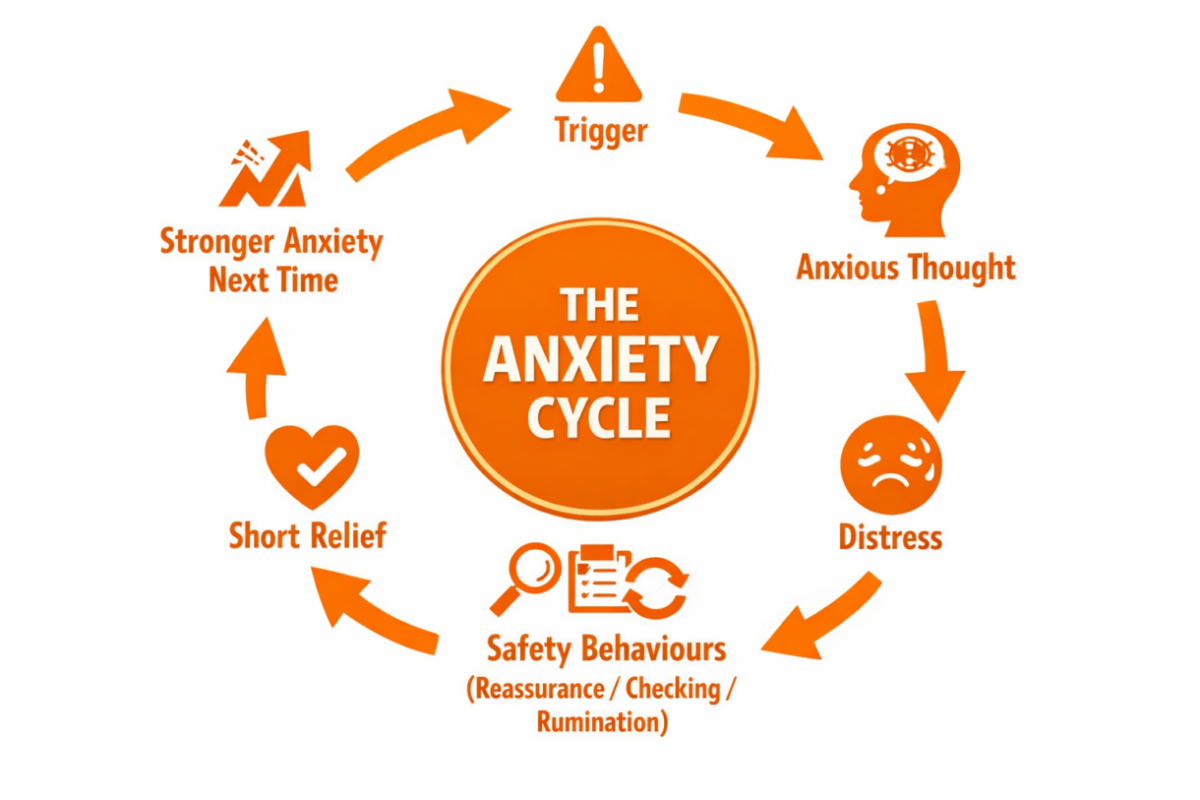
By the time Maya came home each night, her body felt like it had been holding its breath for ten hours. Her jaw ached. Her shoulders were tight. Her stomach felt hard. She replayed tiny moments from the day while brushing her teeth. She checked messages even after she had already checked them. She could not sit through a show without pausing it to answer one more thing.
She was not missing deadlines.
She was missing her own life.
The hidden cost of being the person who always handles it

People often miss anxiety when it wears a clean shirt and sends polished emails.
Maya did not look messy. Her desk was neat. Her work was strong. Her calendar was full. Her team trusted her. From the outside, she looked like proof that pressure made her better.
But her private life told a different story.
She could finish a report, then spend forty minutes wondering if one sentence sounded too sharp. She could lead a meeting, then sit in her car afterward feeling sick because she thought she talked too much. She could get praise from her boss, then immediately worry that the praise meant higher expectations next time.
That is what made her anxiety hard to see. It did not stop her from performing. It used performance as cover.
What showed up on the outside
Clean work
Fast replies
Strong memory
No missed deadlines
Careful planning
Polite tone
High standards
Calm face in meetings
What happened inside
Fear of letting people down
Constant replaying of small moments
Tight chest before simple tasks
Trouble resting without guilt
Overthinking normal messages
Feeling unsafe when there was nothing urgent
Using work to avoid feelings
Feeling tired even after sleep
The part most people got wrong was this: Maya was not anxious because she was weak. She was anxious because her mind had learned to treat small risks like major threats.
A slow reply felt like rejection.
A quiet manager felt like danger.
A normal mistake felt like proof that she was not good enough.
A blank space on her calendar felt less like rest and more like waiting for something bad to happen.
Her deadlines were fine but her nervous system was not

Maya’s work life looked strong because she built it around preventing shame.
She checked everything twice because mistakes felt unbearable. She said yes quickly because disappointing people felt unsafe. She prepared too much because being caught off guard made her panic. She stayed late because being seen as careless scared her more than being exhausted.
This is why “high functioning” can be misleading. The person may still be functioning, but the system keeping them functional is running too hot.
Think of a phone that still works while overheating. You can send messages. You can open apps. You can take calls. But the heat is a warning. Something is being pushed too hard for too long.
Maya’s body gave warnings.
Her eye twitched during long weeks.
Her stomach tightened before meetings.
She woke up at night with work thoughts already moving.
She could not enjoy praise because her brain quickly turned it into pressure.
She had no clear line between caring and fearing.
These were not random habits. They were clues.
| What people saw | What it really cost her |
|---|---|
| She replied quickly | She felt unable to leave messages unanswered |
| She stayed organized | She feared one missed detail would expose her |
| She helped everyone | She did not know how to tolerate someone being upset |
| She prepared early | She imagined worst-case outcomes before normal tasks |
| She never missed deadlines | She used panic as a fuel source |
| She seemed calm | She hid body tension, racing thoughts, and fear |
| She accepted more work | She confused being needed with being safe |
| She smiled in meetings | She reviewed every word afterward |
The table matters because this is where many people lie to themselves.
They say, “I’m fine because I’m getting things done.”
That is not enough.
Getting things done does not prove you are well. It may only prove you have learned how to keep moving while your body begs you to stop.
The meeting that exposed the pattern
The meeting was not special.
That is why it mattered.
It was a regular Monday meeting about a project timeline. Maya had prepared her notes. She had checked the numbers. She had guessed the questions people might ask. She had even prepared a second version of the timeline in case the first one sounded too firm.
During the meeting, her manager said, “Can we revisit the launch date?”
That was all.
No anger. No blame. No criticism.
But Maya’s body reacted as if she had failed.
Her face stayed normal. Her voice stayed even. She nodded, opened the file, and calmly talked through the options.
Inside, her thoughts moved fast.
I should have seen this coming.
They think I planned badly.
Now the whole project looks weak.
I should not have sounded so sure.
I need to fix this before anyone loses trust.
After the meeting, she rewrote the timeline, sent a recap, checked the recap, edited one sentence, checked it again, then watched her inbox. Nobody replied for twenty minutes.
Her brain filled the silence.
They are annoyed.
They are talking about it privately.
The message sounded defensive.
I should send another note.
She did not send another note.
Instead, she opened the draft and stared at it.
That moment showed the real problem. The launch date was not the threat. The silence was not the threat. The threat was the meaning her mind attached to both.
A changed timeline meant failure.
A delayed reply meant rejection.
A neutral comment meant danger.
That is how anxiety runs a life without making a scene.
It turns normal events into private emergencies.
Why praise did not calm her down
Maya’s manager often praised her.
That should have helped.
It did not.
When someone said, “Great work,” Maya felt relief for a few seconds. Then the relief changed into pressure.
Now I have to keep this up.
Now they expect this every time.
Now I cannot make a mistake.
Praise did not land as comfort. It landed as a new standard.
This is one of the sharpest signs that anxiety is in control. The person cannot receive good news cleanly. Every good thing becomes a job to maintain.
A compliment becomes pressure.
A promotion becomes fear.
A full calendar becomes proof of worth.
A quiet weekend becomes guilt.
A kind message becomes something to answer perfectly.
Maya did not know how to let good things be good. Her mind treated success as a narrow ledge. One wrong step, and everything could fall.
That made her work harder, but it also made her smaller.
She avoided trying things she might not master quickly. She stayed in roles where people already approved of her. She did not ask simple questions because she feared looking unprepared. She took safe paths and called them practical.
Anxiety did not only make her tired.
It edited her choices.
The apology habit nobody noticed
Maya apologized all the time.
Not in dramatic ways. Small ways.
Sorry, quick question.
Sorry, just checking.
Sorry if this is obvious.
Sorry to bother you.
Sorry for the delay, even when the reply was only two hours later.
People saw it as politeness.
It was fear.
She used apology as padding. She wrapped normal needs in soft words so nobody would be annoyed. She made herself smaller before asking for space, time, help, or clarity.
The habit looked harmless, but it trained her brain to believe that taking up space required permission.
What she said
Sorry, quick question.
What she meant
Please do not think I am stupid.
What she said
Sorry to bother you.
What she meant
Please do not feel burdened by me.
What she said
Sorry for the delay.
What she meant
Please do not punish me for being human.
What she said
Just checking in.
What she meant
I cannot relax until I know you are not upset.
This is where non-obvious anxiety often hides. Not only in panic. Not only in tears. Sometimes it hides in sentence openers.
Maya’s words were doing emotional labor before the real message even started.
The body kept score before the mind admitted it
Maya did not first admit anxiety through emotion.
She admitted it through her body.
Her shoulders were tight every Sunday evening. Her stomach reacted before important calls. Her hands were cold when she opened certain emails. She felt tired in a way sleep did not fix. She had headaches after days where “nothing bad happened.”
That last part confused her.
Nothing bad happened.
So why did she feel wrecked?
Because her body did not care only about what happened. It also responded to what she imagined might happen.
Every possible mistake had been mentally lived before it existed. Every hard conversation had already happened in her head. Every reply had been judged before it was sent.
Her body was not reacting to one stressful event.
It was reacting to rehearsed danger.
This is why telling someone like Maya to “just relax” is useless. Her problem was not that she forgot to relax. Her problem was that relaxing felt unsafe.
Stillness gave her mind room to scan.
Quiet gave her worries space to speak.
Rest made her feel behind.
So she stayed busy.
Busy looked responsible.
Busy also kept her from hearing herself.
The false reward of overpreparing
Maya believed preparation protected her.
Sometimes it did.
Preparation helped her work well. It helped her avoid careless errors. It helped her feel ready.
But past a certain point, preparation stopped being useful and became a ritual.
Useful preparation has an end.
Anxiety preparation keeps asking for one more check.
One more read.
One more version.
One more backup plan.
One more message.
One more search.
One more rehearsal.
The hard part was that overpreparing worked often enough to keep the habit alive. Maya did avoid mistakes. She did look sharp. She did receive praise.
But the price was hidden.
She spent three hours on tasks that needed one. She lost evenings to work that was already good enough. She trained her brain to believe she survived because she overchecked, not because she was capable.
That belief made her dependent on the ritual.
If she did not overprepare, she felt exposed.
The goal was not to become careless. That would be stupid. The goal was to learn the difference between care and fear.
Care says, “Let me make this clear.”
Fear says, “If this is not perfect, I am not safe.”
Care has a finish line.
Fear moves the line every time you reach it.
The quiet way anxiety harmed her relationships
Maya’s friends thought she was thoughtful.
She remembered birthdays. She replied to messages. She offered help. She noticed when someone sounded off.
But even her kindness had tension under it.
She worried that if she said no, people would stop asking. She worried that if she took too long to reply, people would feel ignored. She worried that if she shared her own problems, she would become too much.
So she became useful instead of honest.
She helped friends move but did not say she was tired.
She listened to everyone else but kept her own stress short.
She said “no worries” when there were worries.
She made herself easy to love by needing very little.
That is not connection. That is performance.
Real closeness needs some friction. It needs the truth. It needs room for a person to be tired, unclear, annoyed, needy, quiet, or unavailable.
Maya had built relationships where people liked her, but not all of them really knew her.
That was not because they were cruel.
It was because she had trained herself to be low-maintenance.
Low-maintenance can become lonely.
The email she rewrote seven times
One Thursday afternoon, Maya needed to tell a client that a request would take longer than expected.
The facts were simple.
The client had changed the scope.
The team needed more time.
The new delivery date was fair.
Maya still rewrote the email seven times.
The first version sounded too direct.
The second sounded too apologetic.
The third had too much detail.
The fourth sounded cold.
The fifth sounded weak.
The sixth sounded defensive.
The seventh was almost identical to the third.
By the time she sent it, her chest was tight.
The client replied twenty minutes later.
Sounds good, thanks.
That was the whole reply.
Maya laughed, but not because it was funny. She laughed because her mind had built a courtroom around a message that needed one clear sentence.
This is the trap.
Anxiety can make normal communication feel like legal defense.
Every word becomes evidence.
Every tone becomes risk.
Every delay becomes a verdict.
A simple boundary becomes something to overexplain.
The lesson was not “write careless emails.” The lesson was “a clear message does not need to solve another person’s possible feelings before they happen.”
That line changed her.
Slowly.
Not all at once.
What finally made her pay attention
Maya did not change because she hit one dramatic breaking point.
She changed because she got bored of being exhausted.
That sounds small, but it was not.
She got tired of checking.
Tired of pretending rest was laziness.
Tired of calling fear “high standards.”
Tired of needing praise and not enjoying it.
Tired of making every task heavier than it needed to be.
One night, she opened her laptop after dinner to “quickly fix” a document.
The document did not need fixing.
She knew that.
She opened it anyway.
Her partner said, “Are you working, or are you scared?”
The question annoyed her because it was accurate.
She closed the laptop.
For the first time, she did not treat the urge to check as a command. She treated it as a signal.
That was the shift.
The urge did not mean the document needed work.
The urge meant her anxiety wanted certainty.
And certainty was the drug she kept chasing.
The difference between a real task and an anxiety task
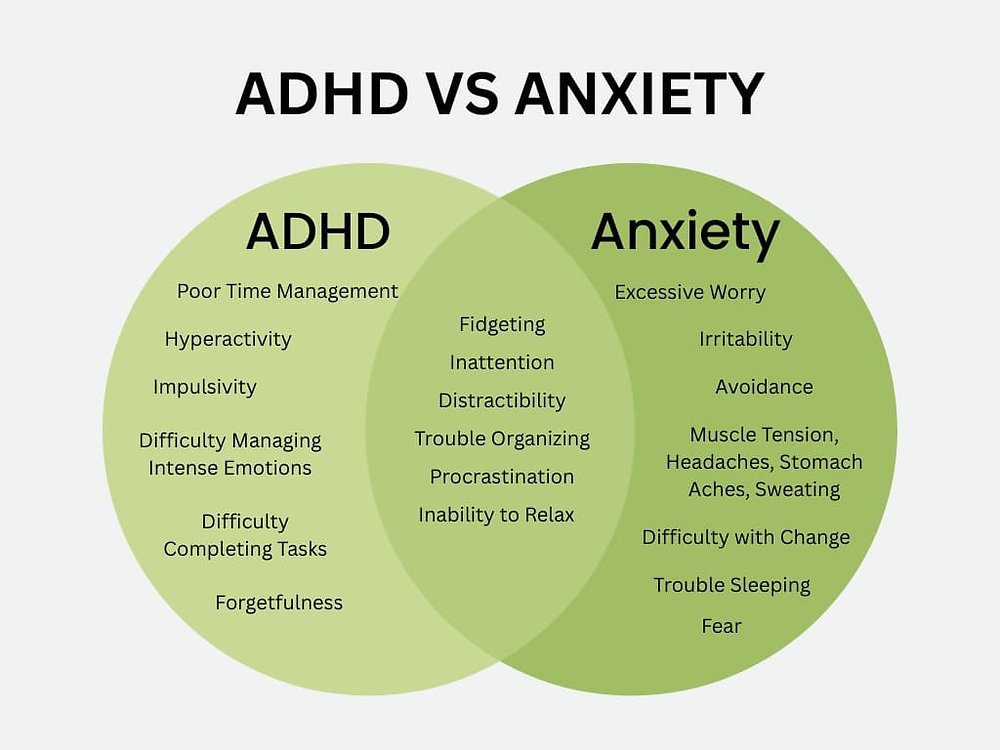
Maya began sorting her work into two groups.
There were real tasks.
Then there were anxiety tasks.
A real task had a clear purpose. Send the file. Confirm the date. Fix the error. Ask the question. Prepare the notes.
An anxiety task had no true finish line. Recheck the file after checking it. Read the message again for tone. Imagine every possible response. Prepare answers for questions nobody asked. Refresh the inbox to control waiting.
The difference sounds simple, but it was hard in real life because anxiety tasks often wore the costume of responsibility.
So Maya started asking herself one question before extra work:
What will this action change?
If the action changed quality, clarity, timing, or truth, it was likely useful.
If the action only reduced discomfort for a few minutes, it was likely anxiety.
That question did not solve everything. But it gave her a pause. And a pause is powerful when your mind is used to obeying fear right away.
| Situation | Anxiety task | Better next move |
| Email already checked twice | Read it five more times for tone | Send it after one final plain read |
| Manager has not replied | Refresh inbox every few minutes | Set a time to check later |
| Meeting may include hard questions | Script every possible answer | Write the three most likely points |
| Friend seems quiet | Assume they are upset | Ask once, then stop building stories |
| Work is praised | Raise the standard again | Let the praise stand without adding pressure |
| Free evening appears | Fill it with chores | Leave one part of the night unplanned |
| Small mistake happens | Treat it as proof of failure | Fix it and name what actually happened |
| Body feels tense | Push harder | Stop and note what fear is asking for |
This table became a private mirror.
It helped Maya see that she was not only doing her job. She was also doing unpaid labor for her anxiety.
How she started saying no without making it a speech
At first, Maya’s boundaries sounded like essays.
She could not simply say, “I can’t take that on today.”
She said:
I’m so sorry, I would normally be happy to help, but I have a few things on my plate, and I don’t want to slow anything down, so maybe I can look later, unless it’s urgent, but I totally understand if you need it sooner.
That was not a boundary.
That was a fear cloud.
She was trying to say no while also preventing disappointment, irritation, judgment, and follow-up questions. That is too much work for one sentence.
So she practiced shorter replies.
I cannot take this on today.
I can review it tomorrow afternoon.
I need the final details before I can give a date.
That timeline will not work on my end.
I can help with this part, not the full task.
These sentences felt rude to her at first.
They were not rude.
They were clear.
Anxious people often confuse clarity with cruelty because they are used to softening every need. Maya had to learn that a sentence can be kind without being padded.
The first time she sent a short boundary, she felt sick.
Nothing bad happened.
The second time, she still felt tense.
Nothing bad happened.
The tenth time, she still cared what people thought, but the fear no longer got the final vote.
That was progress.
Not becoming fearless.
Not becoming cold.
Just no longer letting fear write every sentence.
The “good employee” mask was not the whole truth
Maya liked being good at her job.
That part was real.
The problem was that she used being good at her job to avoid asking harder questions.
Who am I when I am not useful?
Do I believe I deserve rest before everything is done?
Can I be respected without being perfect?
Can someone be upset with me and still care about me?
Can I make a mistake without turning it into a full identity crisis?
These questions were uncomfortable because they reached below productivity.
Productivity was easier.
Productivity gave her proof. It gave her numbers, tasks, replies, finished files, and praise. Inner safety gave her no clean chart. It had to be built slowly.
Maya had to stop treating her work record as her whole worth.
That did not mean caring less.
It meant using a better fuel source.
Fear can push a person far, but it charges interest.
The small rules that helped her stop feeding the anxiety loop
Maya did not fix her anxiety with a morning routine post or a perfect habit tracker.
She used small rules because small rules are harder to turn into performance.
She stopped checking work messages in bed.
She wrote the main point of an email before editing the tone.
She set a limit for how many times she could reread normal messages.
She asked, “Is this useful or is this reassurance?”
She let some replies wait without creating a story.
She practiced leaving one harmless task unfinished until morning.
She told one trusted person when she was anxious instead of acting extra capable.
She named body signals before they turned into overwork.
She used plain language for boundaries.
She watched for the urge to apologize before simple requests.
The rules were not magic. They worked because they interrupted the loop between fear and action.
Before, anxiety spoke and Maya obeyed.
Now, anxiety spoke and Maya checked whether it was telling the truth.
That one gap changed the whole day.
The first unfinished task
The first task Maya left unfinished was small.
A spreadsheet needed formatting. Not numbers. Not errors. Formatting.
Normally, she would have stayed late and fixed the spacing, the column width, the labels, the alignment, the small things nobody had asked for but she felt unable to leave alone.
That night, she stopped.
The file was accurate.
The formatting could wait.
Her anxiety hated this.
It said:
This looks lazy.
Someone will notice.
You are slipping.
This is how standards drop.
Maya listened, but she did not act.
She closed the laptop.
The next morning, nobody had noticed. The world had not punished her. Her value had not dropped overnight.
That was useful evidence.
Not a quote.
Not a theory.
Evidence from her own life.
She learned that anxiety is a poor judge of urgency. It treats discomfort like danger. The task felt urgent because she felt uneasy, not because the task truly needed to be done.
That difference became one of her strongest tools.
Why rest felt wrong before it felt good
When Maya first tried to rest, it did not feel peaceful.
It felt suspicious.
She sat on the couch and thought of laundry. Then email. Then tomorrow’s meeting. Then a friend she needed to answer. Then whether she had sounded weird on a call. Then whether her manager expected an update.
Her body was still, but her mind kept working.
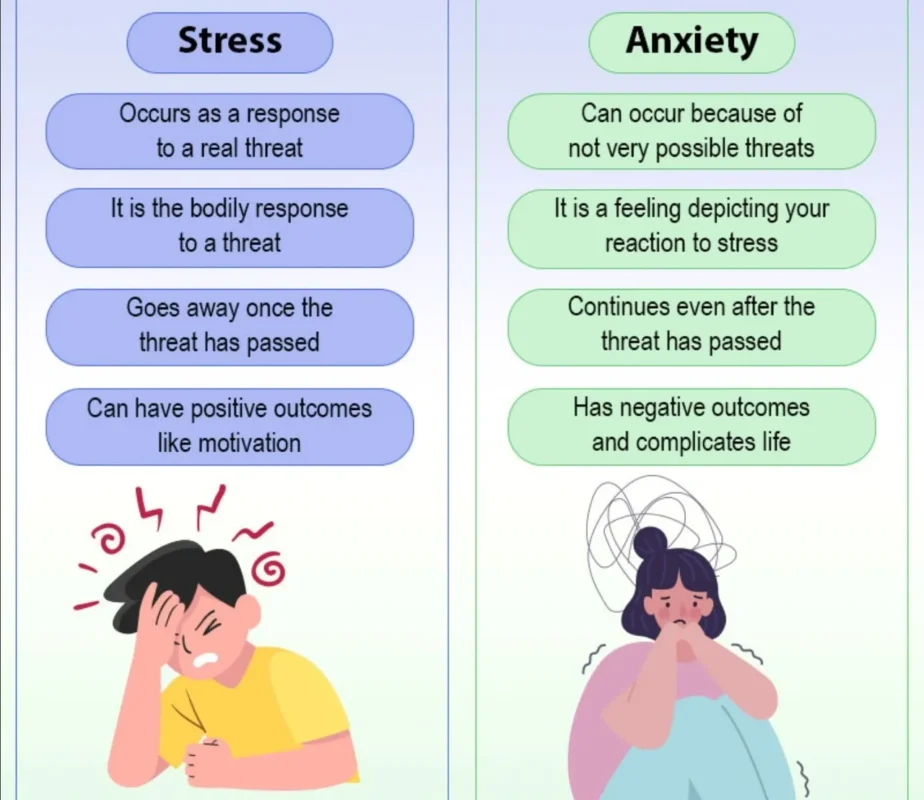
This is the part people do not say enough: rest can feel bad at first when your body is used to stress.
That does not mean rest is failing.
It means your system is learning a different state.
Maya had to stop judging rest by whether it felt calm right away. At first, rest simply meant not obeying every anxious command.
Not opening the laptop.
Not checking the message.
Not fixing the harmless detail.
Not filling silence with chores.
Not turning a free hour into proof of laziness.
Rest started as withdrawal from overcontrol.
Peace came later.
The role of shame in her anxiety
Under Maya’s overwork was shame.
Not loud shame. Quiet shame.
The kind that says:
Do not be difficult.
Do not be wrong.
Do not need too much.
Do not disappoint anyone.
Do not slow people down.
Do not let them see the messy part.
This shame made normal life feel like a test.
It made feedback feel personal.
It made silence feel threatening.
It made boundaries feel selfish.
It made rest feel undeserved.
Maya had to see that shame was not giving her wisdom. It was giving her rules that kept her scared.
A useful rule helps life work better.
A shame rule makes life smaller.
“Check your work before sending it” is useful.
“Never let anyone find a flaw” is shame.
“Be kind when you reply” is useful.
“Make sure nobody ever feels disappointed by you” is shame.
“Prepare for the meeting” is useful.
“Prepare so nobody can ever question you” is shame.
Once Maya saw the difference, she could stop treating every harsh inner rule as truth.
What made this anxiety hard to spot
Maya’s anxiety did not announce itself with one obvious sign.
It hid inside traits people praised.
Responsible.
Helpful.
Prepared.
Thoughtful.
Driven.
Organized.
Calm.
Those traits were not fake. But anxiety had attached itself to them and turned them into survival tools.
That is what makes this pattern so tricky. The person may be doing many good things, but for painful reasons.
Helping is good.
Helping because you fear rejection is costly.
Preparing is good.
Preparing because uncertainty feels unbearable is costly.
Being thoughtful is good.
Being unable to stop reading people’s moods is costly.
Being reliable is good.
Believing you must be reliable to deserve love is costly.
The behavior alone does not tell the full story.
The inner price tells the truth.
The private checklist Maya used
Maya stopped asking, “Am I anxious enough to care?”
That question kept her stuck.
Instead, she asked better questions.
Do I feel allowed to stop after doing enough?
Do I treat small mistakes like danger?
Do I need fast replies to feel safe?
Do I replay normal conversations for too long?
Do I say yes because I want to, or because no feels unsafe?
Do I use work to avoid sitting with my own feelings?
Do I feel guilty when I rest?
Do I turn praise into pressure?
Do I overexplain simple boundaries?
Do I feel tense even when life looks fine on paper?
These questions did not diagnose her. They gave her a clearer view of the pattern.
A label is less important than the truth of what is happening.
Maya did not need a perfect name for the problem before making better choices.
She needed to stop calling suffering “just how I am.”
What helped her most was not a big life change
Maya did not quit her job.
She did not delete every app.
She did not move to the woods.
She made boring changes that were hard to keep.
She stopped using speed as proof of care.
She stopped answering non-urgent messages right away.
She stopped making every boundary warm enough to protect everyone from discomfort.
She stopped treating her first anxious thought as the most accurate thought.
She stopped calling every fear a standard.
She stopped making rest something she had to earn by being drained.
None of this looked dramatic from the outside.
That was fine.
The goal was not to look transformed.
The goal was to be less controlled.
The mistake she made during recovery
Maya tried to recover perfectly.
Of course she did.
She turned healing into another performance.
She wanted to set boundaries well, rest well, think well, sleep well, speak well, and track progress well. She got frustrated when she caught herself checking messages again. She felt like she had failed when she overexplained a boundary. She judged anxious thoughts as if having them meant she was back at the start.
Then she saw the pattern.
She was using the same anxiety system to try to beat anxiety.
That was never going to work.
Recovery could not become another place where she demanded perfect behavior from herself.
So she changed the goal.
Not perfect calm.
More honesty.
Not never checking.
Catching the urge sooner.
Not never worrying.
Not letting worry make every decision.
Not never apologizing.
Not apologizing for having normal needs.
Progress became less dramatic and more real.
The sentence that changed her work life
The most useful sentence Maya learned was simple:
“I can do that by Thursday.”
Not “I’m so sorry.”
Not “I’ll try to get it done as soon as possible.”
Not “I can probably squeeze it in.”
Not “I’ll do my best.”
Just:
“I can do that by Thursday.”
A clear date.
A clear limit.
No panic.
No emotional debt.
This sentence changed more than her schedule. It changed her role. It made her a person with capacity, not an endless resource.
Some people adjusted easily.
A few pushed.
That was useful too.
Maya learned that people who benefit from your lack of boundaries may not clap when you get them.
That does not mean the boundary is wrong.
It may mean the boundary is working.
When anxiety wears ambition as a mask
Maya had ambition.
She wanted to grow. She wanted to do meaningful work. She wanted to be trusted.
But anxiety twisted ambition into fear of falling behind.
Healthy ambition says, “I want to build something.”
Anxious ambition says, “If I stop, I will lose my place.”
Healthy ambition can rest.
Anxious ambition watches everyone else and feels late.
Healthy ambition can learn from mistakes.
Anxious ambition treats mistakes like identity damage.
Healthy ambition has direction.
Anxious ambition has chase.
Maya had to ask herself what she actually wanted, separate from what fear demanded.
That question was uncomfortable because fear had been loud for years.
At first, she did not know.
She knew what looked good. She knew what earned praise. She knew what made her seem competent. But wanting from a calm place felt new.
So she started small.
I want one night without work.
I want to answer a message tomorrow without guilt tonight.
I want to ask for help before I am desperate.
I want to make a mistake and not punish myself for three days.
These were not small goals.
For Maya, they were acts of freedom.
The people around her had to relearn her too
When Maya changed, some people were confused.
They were used to instant replies. They were used to extra help. They were used to her saying yes. They were used to her making things smoother for everyone.
She had trained them well.
Now she had to retrain the pattern.
This did not require a speech. It required steady behavior.
She replied during work hours.
She gave realistic timelines.
She did not accept unclear tasks without asking for missing details.
She stopped volunteering for work she did not have room for.
She allowed silence after saying no.
That last one was hard.
Anxious people often rush to fill silence because silence feels like judgment. Maya practiced letting her answer stand.
No extra paragraph.
No nervous joke.
No apology loop.
No rescue offer.
Just the answer.
The silence did not kill her.
It taught her.
The difference between being kind and being controlled
Maya worried that boundaries would make her selfish.
They did not.
They made her clearer.
Before, she helped with hidden resentment. She said yes, then felt trapped. She replied quickly, then felt drained. She offered support, then felt unseen.
After, her kindness became cleaner.
She helped when she had room.
She said no when she did not.
She listened without pretending she had endless energy.
She gave honest timelines.
She stopped making people guess what she could handle.
That is better for everyone.
Kindness without honesty becomes performance.
Help without limits becomes debt.
Reliability without rest becomes self-erasure.
Maya was not becoming less kind.
She was removing fear from the driver’s seat.
What someone like Maya needs to hear
If Maya’s pattern feels familiar, the hard truth is this:
Your life may look stable because anxiety is doing unpaid management in the background.
That does not mean you are broken.
It means the current system is expensive.
You may be praised for the very behaviors that are draining you.
You may be called dependable when you are actually scared.
You may be called organized when you are actually trying to prevent shame.
You may be called thoughtful when you are actually monitoring everyone’s mood.
You may be called driven when you are actually unable to rest.
Praise does not prove the pattern is healthy.
Results do not prove the cost is fair.
A full calendar does not prove a full life.
What to try this week
Do not attempt to rebuild your whole personality.
That is another anxiety trap.
Try one small pattern break.
Send one clear email without overexplaining.
Let one non-urgent message wait.
Leave one harmless task unfinished.
Ask one direct question instead of guessing.
Say one honest no without a long defense.
Take one quiet hour without turning it into a productivity project.
Notice one body signal before pushing through.
Tell one trusted person the truth instead of saying you are fine.
The point is not to feel calm right away.
The point is to stop proving to your anxiety that it gets to run every part of your day.
The ending was not dramatic
Maya still cared about her work.
She still met deadlines.
She still prepared.
She still liked doing things well.
But the engine changed.
She no longer used panic as her main fuel. She no longer treated every silence as a threat. She no longer believed every task deserved her full body tension. She no longer apologized before taking up normal space.
Some days were still hard.
Some emails still got rewritten.
Some meetings still made her stomach tight.
Some quiet moments still felt strange.
But now she noticed.
And noticing gave her a choice.
That was the real change.
Anxiety had once run her life while letting everyone think she was simply excellent.
Now excellence was no longer enough.
She wanted peace too.
Not perfect peace.
Not a life without stress.
A life where a deadline could be met without her body paying the whole bill.
A life where being dependable did not mean being available to everyone at all times.
A life where rest did not need a defense.
A life where she could be respected without being afraid.
Maya still never missed a deadline.
But finally, she stopped missing herself.