


Relationships are not damaged by conflict alone. They are damaged when conflict turns into disrespect, silence, emotional distance, fear, or repeated hurt that never gets repaired. Every close relationship faces disagreements. Couples argue about money, time, family, attention, household work, intimacy, parenting, habits, and personal space. Friends stop speaking because of misunderstandings. Family members hold grudges for years over one painful moment.
The real issue is not whether conflict happens. The real issue is how people handle it.
Many people grow up watching unhealthy conflict. Some saw shouting. Some saw emotional withdrawal. Others saw passive-aggressive behavior where nobody spoke honestly. Because of this, many adults enter relationships without practical conflict skills. They react instead of communicate. They defend instead of listen. They try to win instead of solve.
Healthy conflict resolution is not about avoiding arguments. It is about learning how to disagree without destroying trust.
People often believe strong relationships are peaceful all the time. Research from relationship experts like John Gottman suggests the opposite. Long-term healthy couples still argue. The difference is that they repair problems faster, communicate with respect, and avoid harmful patterns like contempt, mockery, and emotional punishment.
Conflict can either strengthen a relationship or slowly poison it. Honest conversations can create closeness when both people feel heard and respected.
Why Most Arguments Are Not Really About the Topic

A couple may argue about dirty dishes, but the deeper issue may be feeling ignored. A fight about texting back may actually be about emotional security. An argument about spending money may be connected to childhood experiences with stress and instability.
People rarely fight only about surface-level issues.
Many conflicts carry hidden emotions underneath them:
| Surface Argument | Hidden Emotion |
|---|---|
| “You never help around the house.” | Feeling unsupported |
| “Why didn’t you call me?” | Feeling unimportant |
| “You spend too much money.” | Fear about security |
| “You always work late.” | Feeling emotionally abandoned |
| “You don’t listen to me.” | Feeling invisible |
This is why many arguments repeat. The surface issue changes, but the emotional need stays the same.
Healthy conflict resolution starts when people stop asking, “How do I win this argument?” and start asking, “What pain or need is underneath this reaction?”
That shift changes everything.
The Difference Between Healthy Conflict and Harmful Conflict
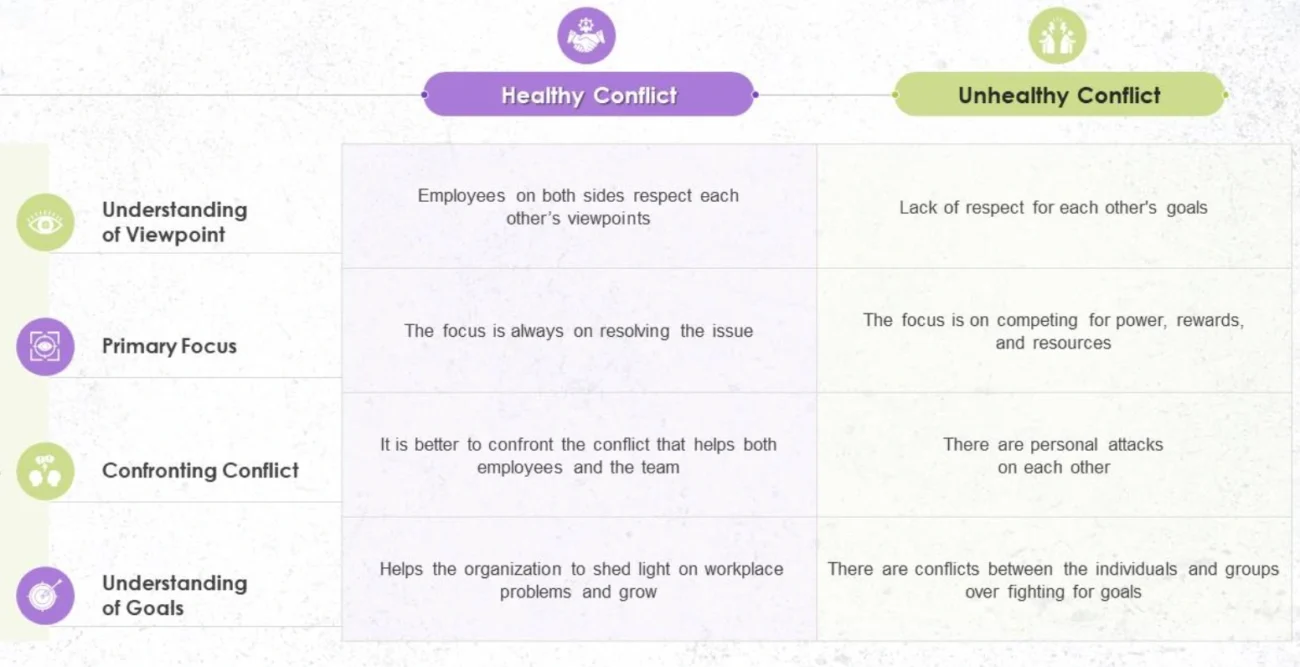
Not every disagreement is unhealthy. Some conflict is necessary. Suppressed emotions often become resentment later. Avoiding every difficult conversation creates emotional distance over time.
Healthy conflict includes honesty, accountability, emotional control, and mutual respect. Harmful conflict includes fear, insults, manipulation, threats, humiliation, or emotional shutdown.
Here are clear differences:
| Healthy Conflict | Harmful Conflict |
|---|---|
| Listening to understand | Listening to attack |
| Staying focused on the issue | Bringing up old mistakes |
| Speaking calmly | Shouting or mocking |
| Taking responsibility | Blaming everything on the other person |
| Looking for solutions | Trying to “win” |
| Respecting boundaries | Crossing emotional lines |
| Repairing after arguments | Punishing through silence or revenge |
One important truth many people ignore is this: calm behavior matters more than clever words.
A person can say technically correct things in a cruel tone and still damage the relationship.
The Hidden Damage of Poor Conflict Habits
Some relationship problems do not explode loudly. They slowly weaken trust over time.
Repeated unhealthy conflict patterns can create:
- Emotional exhaustion
- Anxiety before conversations
- Fear of honesty
- Loss of attraction
- Lack of emotional safety
- Growing resentment
- Loneliness inside the relationship
One of the biggest mistakes couples make is assuming unresolved issues disappear with time. Usually, they collect quietly in the background.
A partner who says, “It’s fine,” while feeling hurt repeatedly may eventually stop trying emotionally. That emotional withdrawal often becomes harder to repair than the original conflict.
People usually notice the loud arguments. They often miss the dangerous silence that comes after too many unresolved hurts.
Why Emotional Safety Matters More Than Being Right
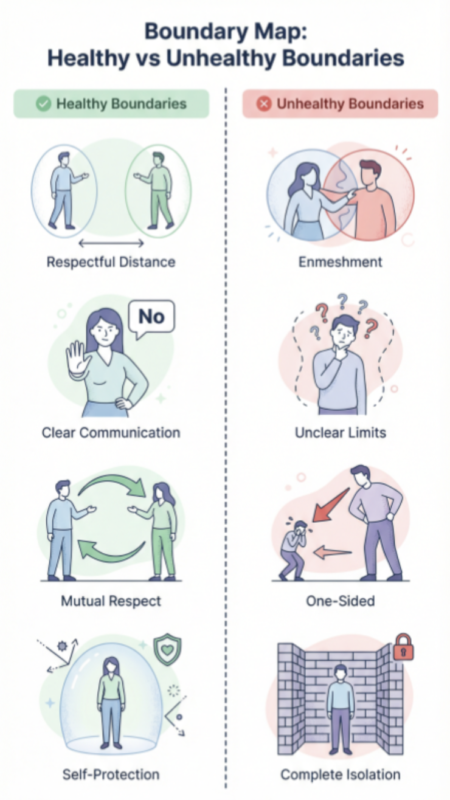
Many arguments become power struggles because people focus too much on proving their point.
But relationships are not courtrooms.
If one person “wins” by humiliating the other, the relationship loses.
Emotional safety means both people feel they can speak honestly without fear of ridicule, punishment, or emotional attack.
Without emotional safety:
- People hide feelings
- Honest conversations stop
- Resentment grows quietly
- Defensive behavior increases
- Small issues become explosive later
A relationship becomes emotionally unsafe when people repeatedly experience:
- Sarcasm during vulnerable moments
- Interruptions
- Eye-rolling
- Mocking
- Name-calling
- Emotional blackmail
- Silent treatment
- Threats of leaving during every argument
Many people underestimate how deeply sarcasm and contempt damage closeness. According to relationship studies from the Gottman Institute, contempt is one of the strongest predictors of relationship breakdown. Contempt includes acting superior, mocking, insulting, or speaking with disgust.
A person may forget exact words from an argument, but they rarely forget how unsafe they felt during it.
The Role of Childhood Experiences in Adult Conflict

People often repeat conflict styles they learned early in life.
Someone raised in a loud household may think yelling is normal communication. Someone raised around emotional avoidance may shut down during disagreement because conflict feels dangerous.
Past experiences shape reactions in ways people may not notice.
Examples include:
- Children criticized constantly may become highly defensive adults.
- Children ignored emotionally may fear abandonment during disagreements.
- Children raised around unstable anger may panic during conflict.
- Children forced to stay silent may struggle expressing needs.
This does not excuse harmful behavior. Adults are still responsible for learning healthier communication.
But understanding the source of reactions helps couples stop seeing each other as enemies.
Sometimes a partner is not “overreacting.” They may be reacting from old emotional wounds that were never fully healed.
The Problem With “Always” and “Never”
Words like “always” and “never” damage productive conversations because they exaggerate behavior and trigger defensiveness.
Examples:
- “You never listen.”
- “You always ignore me.”
- “You never care.”
- “You always ruin everything.”
These statements make people feel attacked instead of understood.
A healthier approach focuses on specific actions and emotions.
Compare these:
| Unhelpful Statement | More Effective Statement |
|---|---|
| “You never care about me.” | “I felt hurt when you ignored my message yesterday.” |
| “You always embarrass me.” | “I felt uncomfortable when you joked about me in front of others.” |
| “You never help.” | “I feel overwhelmed handling everything alone.” |
Specific language creates room for conversation. Extreme language creates defense.
Timing Changes the Outcome of Difficult Conversations
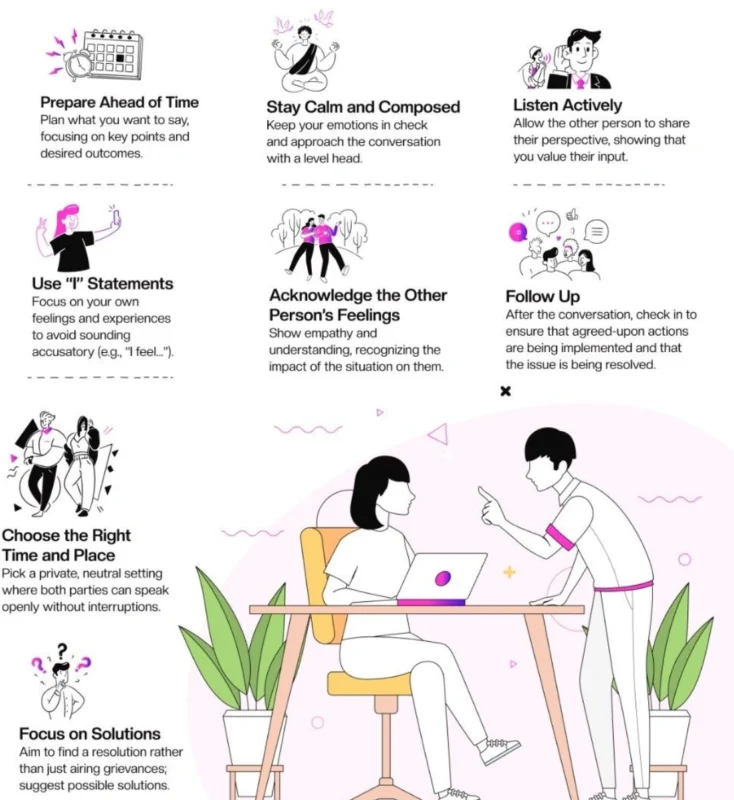
Even important conversations can fail if the timing is wrong.
Trying to solve serious issues when someone is:
- exhausted,
- stressed,
- hungry,
- emotionally flooded,
- distracted,
- or rushing somewhere
usually leads to worse communication.
Healthy couples understand timing matters.
Good moments for serious discussions often include:
- calm evenings,
- private spaces,
- emotionally settled moments,
- or planned conversations.
Bad moments include:
- public settings,
- right before work,
- during high stress,
- late-night emotional exhaustion,
- or immediately after another argument.
Many conflicts become worse simply because people force conversations before emotions settle.
That does not mean avoiding issues forever. It means choosing moments that increase the chance of understanding.
Listening Is Harder Than Speaking
Most people believe they are good listeners. Many are actually waiting for their turn to respond.
Real listening means:
- not interrupting,
- not preparing counterarguments immediately,
- not minimizing feelings,
- and not rushing to fix everything instantly.
People want understanding before solutions.
A partner saying, “I feel lonely lately,” does not always want advice first. They may want emotional acknowledgment.
Simple responses often work better than dramatic speeches:
- “I understand why that hurt.”
- “I didn’t realize you felt that way.”
- “Thank you for telling me honestly.”
- “I can see why you’re upset.”
Feeling heard reduces emotional intensity faster than feeling corrected.
Why Defensiveness Blocks Resolution
Defensiveness sounds like self-protection, but it usually blocks progress.
Common defensive responses:
- “I only did that because you…”
- “You do the same thing.”
- “You’re too sensitive.”
- “That’s not what happened.”
- “You misunderstood.”
Defensiveness shifts attention away from accountability.
Healthy communication allows space for partial responsibility.
Even saying:
- “I understand my tone was hurtful.”
- “I should have handled that better.”
- “I can see my part in this.”
can completely change the direction of a conversation.
Accountability does not mean accepting false blame. It means recognizing personal impact honestly.
Small Repairs Save Relationships
One healthy habit many strong couples share is repair attempts.
Repair attempts are small actions that reduce tension during or after conflict.
Examples include:
- apologizing sincerely,
- making gentle humor,
- touching a partner’s hand,
- admitting fault,
- taking a calm pause,
- or saying, “Let’s restart this conversation.”
Many people think relationships fail from huge betrayals alone. Often they fail because small emotional injuries never get repaired consistently.
Tiny moments matter more than people think.
A genuine apology can stop resentment from becoming permanent emotional distance.
What a Real Apology Looks Like
Many apologies fail because they avoid responsibility.
Weak apologies sound like:
- “I’m sorry you feel that way.”
- “I guess I upset you.”
- “Sorry, but you also…”
- “I already said sorry, what else do you want?”
A real apology includes:
- acknowledgment,
- responsibility,
- empathy,
- and changed behavior.
A meaningful apology sounds more like:
- “I interrupted and dismissed your feelings. That was unfair.”
- “I understand why you felt hurt.”
- “I want to handle this differently next time.”
Words alone are not enough if behavior never changes afterward.
Repeated apologies without changed actions slowly lose meaning.
Why Some People Shut Down During Conflict
Not everybody reacts loudly during arguments. Some people emotionally disappear.
This shutdown response can include:
- silence,
- avoidance,
- leaving conversations,
- emotional numbness,
- or refusing to engage.
Sometimes this happens because the person feels overwhelmed emotionally. Their nervous system moves into protection mode.
But repeated emotional shutdown damages relationships when issues never get addressed.
Healthy conflict resolution requires balance:
- not exploding emotionally,
- but also not disappearing emotionally.
People who need breaks during conflict should communicate clearly:
- “I need 20 minutes to calm down.”
- “I want to continue this conversation later.”
- “I’m overwhelmed right now, but I’m not avoiding you.”
That approach protects both emotional regulation and communication.
The Danger of Keeping Score
Many couples quietly track mistakes:
- who apologized last,
- who sacrificed more,
- who forgot something,
- who started arguments,
- who worked harder.
This creates competition instead of partnership.
Healthy relationships are not built on exact equality every moment. Sometimes one partner gives more support temporarily because life circumstances change.
Scorekeeping creates bitterness because relationships become transactional.
Examples:
- “I cooked three times this week.”
- “I apologized last time.”
- “I always make the effort first.”
Healthy couples focus more on teamwork than emotional accounting.
Conflict About Money Often Means Conflict About Fear
Money arguments are rarely just mathematical disagreements.
Financial conflict usually connects to:
- fear,
- control,
- security,
- independence,
- or personal identity.
One partner may spend freely because they associate money with freedom and enjoyment. Another may save heavily because they grew up around instability.
Neither person is automatically wrong.
Problems happen when couples attack each other instead of understanding the emotional meaning behind financial behavior.
Helpful financial conflict habits include:
- discussing goals calmly,
- setting shared expectations,
- planning budgets together,
- and avoiding shame-based language.
Statements like:
- “You’re irresponsible.”
- “You’re cheap.”
- “You waste everything.”
usually create defensiveness instead of teamwork.
Digital Communication Creates New Relationship Problems
Modern relationships face conflict styles previous generations did not deal with constantly.
Texting creates misunderstandings because tone disappears. Social media creates comparison, jealousy, and public conflict.
Common digital conflict triggers:
- delayed replies,
- online flirting,
- hiding messages,
- oversharing private problems online,
- ignoring messages while active elsewhere,
- or constant phone distraction.
Many couples underestimate how emotionally painful digital neglect can feel.
A person physically present but emotionally absorbed in a phone often sends the message:
“You matter less than whatever is on this screen.”
Healthy digital habits include:
- discussing boundaries openly,
- avoiding serious arguments through text,
- limiting public relationship drama,
- and giving focused attention during conversations.
Family Conflict Can Damage Romantic Relationships
Many relationship conflicts come from outside pressure rather than the couple alone.
Examples include:
- controlling parents,
- interfering relatives,
- loyalty conflicts,
- parenting disagreements,
- or family criticism.
One major issue appears when partners fail to protect each other emotionally around family situations.
A healthy relationship requires balance:
- respecting family,
- while also protecting the partnership.
If one partner constantly allows disrespect from relatives without support, resentment grows quickly.
Strong couples discuss boundaries privately and present united decisions publicly.
Jealousy Is Often About Fear, Not Possession
Jealousy is usually connected to insecurity, fear of loss, betrayal history, or low self-worth.
People often shame jealousy instead of understanding it.
Healthy responses to jealousy include:
- honest discussion,
- reassurance,
- transparency,
- and self-reflection.
Unhealthy responses include:
- controlling behavior,
- surveillance,
- accusations without evidence,
- or emotional manipulation.
Trust cannot survive where constant suspicion replaces communication.
At the same time, people should not dismiss a partner’s concerns carelessly. If behavior repeatedly creates insecurity, that issue deserves honest conversation.
Conflict After Betrayal Requires Different Healing
Some conflicts involve deeper wounds:
- cheating,
- lying,
- broken promises,
- financial secrecy,
- or emotional betrayal.
Trust repair after betrayal takes longer because emotional safety has been damaged.
Important realities after betrayal:
- forgiveness does not erase pain instantly,
- rebuilding trust takes consistency,
- transparency matters,
- and emotional reactions may continue for some time.
Many people expect trust to return quickly after an apology. That expectation is unrealistic.
Trust grows slowly through repeated honest actions over time.
The Importance of Boundaries During Conflict
Healthy relationships need boundaries, even during emotional moments.
Boundaries protect dignity and emotional safety.
Examples:
- no name-calling,
- no threats,
- no physical intimidation,
- no sharing private information publicly,
- no breaking belongings,
- no weaponizing vulnerabilities.
Arguments become dangerous when people intentionally target emotional weak points to hurt each other.
Love should never become permission for cruelty.
Strong boundaries actually improve communication because both people know emotional safety matters.
How Humor Helps and Hurts During Arguments
Humor can reduce tension when used carefully. But it can also become a weapon.
Helpful humor:
- gentle,
- calming,
- affectionate,
- and respectful.
Harmful humor:
- sarcastic,
- humiliating,
- dismissive,
- or mocking.
A joke that embarrasses someone during vulnerability damages trust quickly.
The goal of humor should be emotional relief, not emotional superiority.
Why Silence Can Be More Damaging Than Anger
Many people fear anger more than silence. But emotional withdrawal can damage relationships deeply.
The silent treatment creates:
- confusion,
- anxiety,
- emotional isolation,
- and insecurity.
Temporary space during conflict is healthy when communicated respectfully.
Punishing silence is different.
Examples of harmful silence:
- ignoring messages for days intentionally,
- refusing eye contact,
- withholding affection to control behavior,
- or pretending someone does not exist emotionally.
Silence becomes emotionally abusive when used to create fear or punishment.
Practical Habits That Prevent Bigger Conflicts
Healthy conflict resolution does not begin during arguments. It begins in daily behavior.
Small daily habits reduce emotional tension before problems grow larger.
Helpful habits include:
- checking in emotionally,
- expressing appreciation regularly,
- sharing responsibilities fairly,
- discussing stress honestly,
- and addressing issues early.
Couples who only communicate seriously during conflict often lose emotional closeness gradually.
Simple habits matter:
- asking about each other’s day,
- saying thank you,
- showing physical affection,
- listening without multitasking,
- or apologizing quickly after mistakes.
Relationships usually weaken slowly before they collapse suddenly.
Questions That Improve Difficult Conversations
Some questions open communication instead of escalating conflict.
Helpful questions:
- “What part hurt you the most?”
- “What do you need from me right now?”
- “How can we handle this better next time?”
- “What are we missing here?”
- “Do you feel understood?”
- “What would repair look like for you?”
Questions shift conversations away from attack mode and toward understanding.
People become less defensive when they feel curiosity instead of judgment.
Conflict Resolution Requires Emotional Maturity
Emotional maturity does not mean never getting upset. It means handling emotions responsibly.
Emotionally mature people:
- communicate honestly,
- admit mistakes,
- regulate reactions,
- avoid cruelty,
- and stay accountable.
Emotionally immature conflict patterns include:
- blame shifting,
- manipulation,
- revenge behavior,
- constant victim mentality,
- or refusal to communicate.
Maturity shows most clearly during stress, disappointment, and disagreement.
Anyone can act loving during easy moments. Conflict reveals emotional character more accurately.
What Healthy Couples Do Differently
Research and long-term relationship observations show that healthy couples often share similar habits.
| Healthy Relationship Habit | Why It Matters |
|---|---|
| They repair conflict quickly | Prevents resentment buildup |
| They speak respectfully during anger | Protects emotional safety |
| They allow honest disagreement | Encourages openness |
| They apologize sincerely | Restores trust |
| They avoid public humiliation | Preserves dignity |
| They discuss expectations clearly | Reduces misunderstandings |
| They show appreciation often | Builds emotional connection |
Healthy couples are not perfect. They are simply more intentional about repair, respect, and communication.
When Conflict Becomes Emotionally Unsafe
Some conflicts move beyond normal relationship struggles.
Warning signs include:
- constant fear during disagreements,
- emotional intimidation,
- manipulation,
- verbal abuse,
- threats,
- physical aggression,
- or extreme control.
No communication strategy fixes abuse alone.
People often stay too long hoping communication will magically change deeply destructive behavior. Sometimes the healthiest choice is distance, protection, or ending the relationship.
Not every relationship can or should be saved.
That truth is uncomfortable, but real.
Why Forgiveness Is Often Misunderstood
Forgiveness does not mean:
- forgetting,
- excusing harm,
- tolerating repeated disrespect,
- or instantly rebuilding trust.
Healthy forgiveness means releasing the constant desire for revenge or emotional punishment.
But forgiveness without accountability usually creates repeated harm.
Real reconciliation requires:
- changed behavior,
- honesty,
- responsibility,
- and rebuilt safety.
Some people ask for forgiveness while refusing to change. That is not healing. That is avoidance.
Communication During Stressful Life Periods
Conflict often increases during stressful life phases:
- financial pressure,
- illness,
- parenting exhaustion,
- grief,
- career struggles,
- or relocation.
Stress lowers emotional patience.
During difficult periods, couples often need:
- more empathy,
- more direct communication,
- and lower expectations for perfection.
Instead of assuming bad intentions, healthy partners ask:
- “Are we fighting each other or fighting stress together?”
That perspective reduces unnecessary hostility.
The Long-Term Goal of Conflict Resolution
The goal is not perfect agreement.
The goal is:
- understanding,
- respect,
- emotional safety,
- teamwork,
- and honest communication.
Strong relationships are built through repeated moments where people choose respect even while upset.
Conflict handled well can actually deepen trust because it proves the relationship can survive honesty.
A relationship becomes stronger when both people know:
- difficult conversations are allowed,
- emotions are respected,
- accountability exists,
- and repair is possible.