


EMDR therapy is a treatment method used to help people process painful memories, trauma, fear, anxiety, and emotional stress. The full name is Eye Movement Desensitization and Reprocessing. Even though the name sounds technical, the basic idea is actually simple. EMDR helps the brain reprocess difficult memories so they stop feeling as emotionally overwhelming.
Many people who start EMDR therapy say the same thing: “I know the bad event is over, but my mind and body still react like it’s happening now.” EMDR is designed to help reduce that emotional intensity.
This therapy became popular because many trauma survivors improved after traditional talk therapy did not fully help them. Over time, EMDR started being used for anxiety, panic attacks, childhood trauma, grief, abuse recovery, phobias, stress after accidents, military trauma, and even performance anxiety.
EMDR does not erase memories. Instead, it changes how the brain stores and reacts to those memories.
People often describe the result this way:
| Before EMDR | After EMDR |
|---|---|
| Memory feels emotionally intense | Memory feels more distant |
| Strong body reactions | Calmer physical response |
| Flashbacks or panic | Better emotional control |
| Shame or fear | Greater understanding |
| Feeling trapped in the past | Feeling more present |
The goal is not forgetting. The goal is healing.
Why Trauma Stays Stuck in the Brain
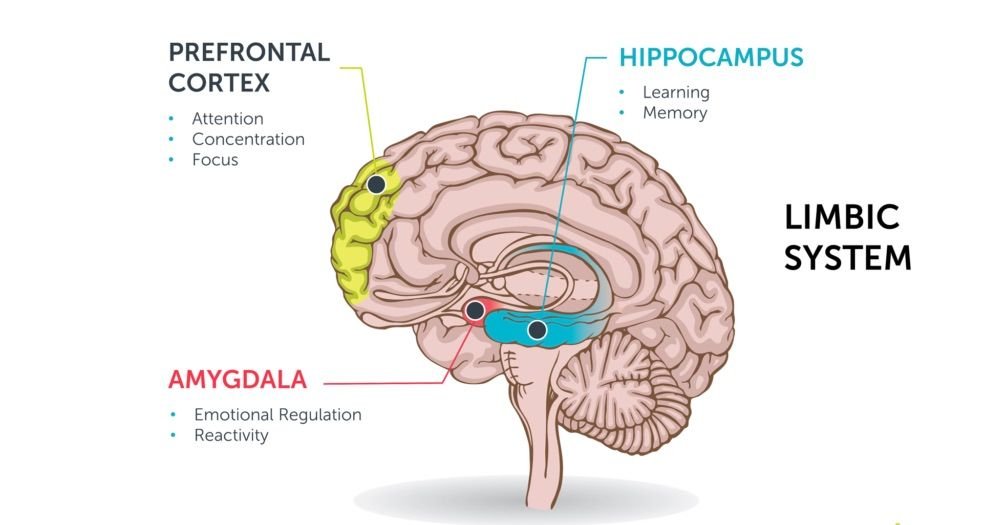
Most daily experiences get processed naturally by the brain. Over time, the emotional intensity fades. A stressful argument from years ago usually does not create a panic response today.
Trauma works differently.
During extremely stressful experiences, the brain may store memories in a “frozen” form. That memory stays connected to fear, panic, shame, or danger signals.
This is why people may react strongly years later.
Examples include:
- Loud sounds causing panic after military combat
- Fear after a car accident
- Anxiety around relationships after abuse
- Panic during medical procedures after past trauma
- Emotional shutdown after childhood neglect
Trauma responses are not weakness. They are survival responses that never fully turned off.
EMDR attempts to help the brain finish processing what got stuck.
The Story Behind EMDR Therapy

EMDR therapy was developed in the late 1980s by psychologist Francine Shapiro.
According to her early observations, certain eye movements seemed to reduce emotional distress connected to painful thoughts. She later studied this effect further and developed structured therapy methods around it.
At first, many professionals were skeptical because the process looked unusual. Over time, research studies showed positive results for many trauma patients, especially those with PTSD.
Today EMDR is recognized in many mental health organizations worldwide.
Areas where EMDR is commonly used:
| Mental Health Issue | EMDR Use |
|---|---|
| PTSD | Very common |
| Childhood trauma | Common |
| Anxiety disorders | Growing use |
| Panic attacks | Moderate use |
| Grief | Sometimes helpful |
| Phobias | Select cases |
| Abuse recovery | Very common |
EMDR is now used in hospitals, trauma clinics, veteran treatment centers, and private therapy practices.
What Happens During EMDR Therapy
People often imagine EMDR as hypnosis or mind control because of the eye movement part. That is incorrect.
The person stays awake, aware, and in control during sessions.
The therapist guides the patient through memories while using bilateral stimulation. This usually involves:
- Eye movements
- Tapping
- Alternating sounds
The client focuses briefly on a painful memory while following the stimulation pattern.
Over time, the emotional intensity connected to the memory often decreases.
A simple session may include:
| Session Step | What Happens |
|---|---|
| Discussion | Therapist explains process |
| Memory focus | Specific event identified |
| Emotional rating | Stress level measured |
| Bilateral stimulation | Eye movement or tapping begins |
| Reflection | Patient describes thoughts or feelings |
| Repetition | Process continues gradually |
The session is structured carefully to avoid emotional overload.
Why Eye Movements Are Used
One of the most discussed parts of EMDR is the eye movement process.
The exact reason EMDR works is still debated among researchers. However, several theories exist.
Some experts believe bilateral stimulation helps the brain process memories similarly to how memories are processed during REM sleep.
Others believe the eye movements reduce emotional intensity by forcing the brain to split attention between memory and physical movement.
Possible effects of bilateral stimulation:
| Possible Effect | Explanation |
|---|---|
| Reduced emotional intensity | Memory feels less overwhelming |
| Improved memory processing | Brain reorganizes stored experience |
| Lower nervous system activation | Body feels calmer |
| Increased mental flexibility | Less “stuck” thinking |
Even experts who disagree on the exact mechanism often acknowledge that many patients improve through the process.
EMDR Is Not Just Talking About Trauma
Traditional therapy often involves long conversations about emotions and past experiences.
EMDR is different because the focus is more structured.
Many people who struggle to explain feelings verbally prefer EMDR because it does not always require long discussions.
Differences between traditional talk therapy and EMDR:
| Talk Therapy | EMDR |
|---|---|
| Long verbal processing | Structured memory focus |
| Conversation-heavy | Bilateral stimulation used |
| May analyze problems deeply | Focuses on reprocessing |
| Often slower emotional shifts | Sometimes faster trauma relief |
Both approaches can be useful. Some therapists even combine them.
What EMDR Feels Like During a Session
People experience EMDR differently.
Some common experiences include:
- Emotional release
- Physical tension
- New thoughts appearing
- Memories becoming clearer
- Memories feeling more distant
- Sudden insights
Some patients say sessions feel mentally tiring afterward because the brain is actively processing emotions.
Common reactions after EMDR:
| Reaction | Normal? |
|---|---|
| Fatigue | Yes |
| Emotional release | Yes |
| Vivid dreams | Sometimes |
| Feeling calmer | Common |
| Temporary emotional sensitivity | Possible |
Therapists usually prepare patients for these reactions beforehand.
Trauma Is Not Always One Big Event
Many people think trauma only means war, severe accidents, or disasters.
Trauma can also come from repeated emotional experiences.
Examples include:
- Childhood neglect
- Bullying
- Emotional abuse
- Rejection
- Humiliation
- Growing up in unstable homes
Smaller repeated experiences sometimes affect mental health deeply over time.
EMDR therapists often work with both “big trauma” and “small trauma.”
| Big Trauma | Small Repeated Trauma |
|---|---|
| Car accidents | Constant criticism |
| Violence | Emotional neglect |
| Natural disasters | Childhood instability |
| Assault | Repeated bullying |
Both types can shape emotional reactions later in life.
Why the Body Reacts to Old Memories
Trauma is not only stored mentally. The body also remembers stress.
People may experience:
- Sweating
- Rapid heartbeat
- Muscle tension
- Nausea
- Panic
- Shaking
This happens because the nervous system learned to stay alert.
EMDR often helps reduce physical reactions connected to old memories.
Body responses before healing:
| Trigger | Common Body Reaction |
|---|---|
| Loud sounds | Panic |
| Conflict | Tight chest |
| Certain places | Sweating |
| Relationship stress | Rapid heartbeat |
After successful processing, triggers often lose much of their power.
EMDR and PTSD
PTSD stands for Post-Traumatic Stress Disorder.
It can develop after extremely stressful events.
Common PTSD symptoms include:
- Flashbacks
- Nightmares
- Hypervigilance
- Emotional numbness
- Panic reactions
- Avoidance behaviors
EMDR became especially well known because many PTSD patients improved with treatment.
Military veterans, assault survivors, accident survivors, and abuse survivors have all used EMDR successfully.
Common PTSD triggers:
| Trigger | Possible Reaction |
|---|---|
| Loud noise | Fear response |
| Smell linked to trauma | Panic |
| Certain locations | Flashbacks |
| Arguments | Emotional shutdown |
EMDR aims to reduce the nervous system reaction tied to these triggers.
Childhood Trauma and Adult Emotional Patterns
Many adult emotional struggles begin in childhood experiences.
Examples include:
- Fear of abandonment
- Low self-esteem
- Trust problems
- Emotional numbness
- People-pleasing behavior
Childhood trauma sometimes affects adult relationships without the person fully realizing why.
EMDR therapists often help clients identify early experiences connected to current emotional patterns.
Common childhood experiences linked to adult struggles:
| Childhood Experience | Possible Adult Effect |
|---|---|
| Constant criticism | Low confidence |
| Unpredictable home life | Anxiety |
| Emotional neglect | Difficulty expressing feelings |
| Bullying | Social insecurity |
Healing these earlier experiences can reduce present-day emotional pain.
EMDR Does Not Force People to Relive Trauma Completely
One fear many people have is losing emotional control during therapy.
EMDR therapists are trained to avoid overwhelming patients.
The process usually happens gradually.
Safety methods often include:
- Relaxation exercises
- Grounding techniques
- Emotional stabilization work
- Controlled pacing
Patients can stop at any time.
Good EMDR therapy focuses heavily on emotional safety before processing trauma directly.
The Eight Phases of EMDR Therapy
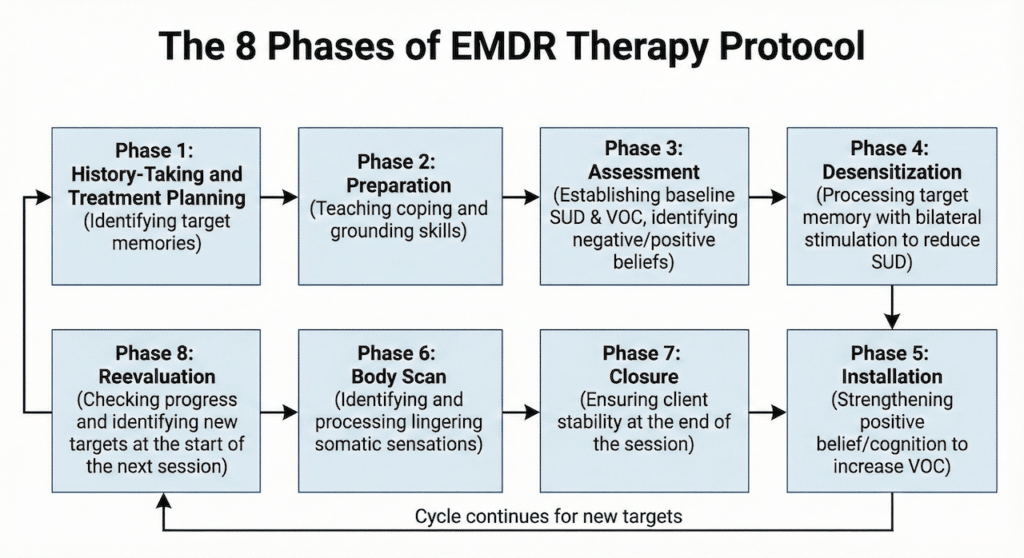
EMDR therapy follows a structured system with eight phases.
These phases help therapists move safely through treatment.
| EMDR Phase | Purpose |
|---|---|
| History taking | Understanding background |
| Preparation | Building coping skills |
| Assessment | Identifying target memory |
| Desensitization | Reducing emotional intensity |
| Installation | Strengthening healthier beliefs |
| Body scan | Checking physical reactions |
| Closure | Stabilizing session |
| Reevaluation | Reviewing progress |
This structure helps prevent emotional overload.
EMDR and Anxiety Disorders
EMDR is increasingly used for anxiety problems.
Sometimes anxiety develops because of unresolved past experiences.
Examples include:
- Panic after childhood embarrassment
- Fear after accidents
- Social anxiety linked to bullying
EMDR may help reduce emotional sensitivity connected to these memories.
Anxiety symptoms sometimes improved through EMDR include:
| Anxiety Symptom | Possible Improvement |
|---|---|
| Panic attacks | Reduced frequency |
| Social fear | Increased confidence |
| Constant worry | Calmer thinking |
| Trigger reactions | Less intensity |
Not every anxiety disorder comes from trauma, but many emotional fears are connected to earlier experiences.
Why Some People Improve Faster Than Others
Healing speed varies greatly.
Factors affecting EMDR progress include:
- Trauma severity
- Support systems
- Current stress levels
- Emotional safety
- Childhood history
- Nervous system sensitivity
Single-event trauma sometimes improves faster than long-term childhood trauma.
General comparison:
| Trauma Type | Typical Treatment Complexity |
|---|---|
| Single accident | Moderate |
| Childhood abuse | Higher |
| Military trauma | Higher |
| Relationship trauma | Moderate to high |
Healing is not a competition. Progress timelines differ for everyone.
Misunderstandings About EMDR

Several myths exist around EMDR therapy.
Common misconceptions include:
| Myth | Reality |
|---|---|
| EMDR erases memories | Memories remain |
| EMDR is hypnosis | Patient stays fully aware |
| EMDR works instantly | Healing still takes time |
| Only veterans use EMDR | Many people use it |
| Eye movements alone heal trauma | Full therapy process matters |
EMDR is structured psychotherapy, not a magic trick.
Emotional Exhaustion After Trauma
Many trauma survivors feel constantly emotionally tired.
This happens because the nervous system stays alert for danger even when no danger exists.
Common trauma exhaustion signs:
- Overthinking
- Sleep problems
- Irritability
- Emotional numbness
- Hyperawareness
EMDR often helps reduce this constant internal tension.
Trauma responses may look like:
| External Appearance | Internal Experience |
|---|---|
| Quiet person | Constant fear |
| Angry reactions | Nervous system overload |
| Emotional shutdown | Survival response |
Understanding trauma changes how people view their own reactions.
EMDR and Grief
Grief sometimes becomes “stuck” emotionally, especially after traumatic loss.
EMDR may help people process:
- Sudden death
- Medical trauma
- Complicated grief
- Survivor guilt
The goal is not forgetting loved ones. The goal is reducing overwhelming pain tied to the memory.
The Role of Trust in EMDR Therapy
EMDR works best when clients feel emotionally safe with the therapist.
Trust allows the nervous system to relax enough for processing to happen.
Important therapist qualities include:
| Quality | Why It Matters |
|---|---|
| Calm communication | Reduces anxiety |
| Patience | Prevents pressure |
| Trauma training | Ensures safety |
| Emotional validation | Builds trust |
A rushed or emotionally unsafe environment can make trauma processing harder.
EMDR Is Sometimes Emotionally Intense

Although many people improve, EMDR can feel emotionally difficult at times.
Memories may temporarily feel more active during treatment.
This is why trained therapists monitor emotional stability carefully.
Patients are usually encouraged to:
- Rest after sessions
- Drink water
- Journal emotions
- Use grounding exercises
- Avoid major stress immediately after sessions
Healing often involves temporary emotional discomfort before improvement.
How People Know EMDR Is Helping
Progress signs vary.
Many people notice:
| Improvement Sign | Meaning |
|---|---|
| Triggers feel weaker | Nervous system calming |
| Better sleep | Lower stress activation |
| Less panic | Trauma response reducing |
| Improved relationships | Emotional regulation improving |
| More self-confidence | Shame decreasing |
Sometimes progress happens slowly and quietly.
EMDR and the Brain’s Survival System
Trauma activates survival responses:
- Fight
- Flight
- Freeze
Some people become angry and reactive.
Some avoid situations.
Some emotionally shut down completely.
EMDR attempts to help the brain recognize that the danger has passed.
Survival responses during trauma:
| Response | Example |
|---|---|
| Fight | Anger or defensiveness |
| Flight | Avoidance |
| Freeze | Emotional numbness |
These reactions are protective, not personal failures.
Why EMDR Feels Different From Normal Memory Recall
Normally when people remember events, the memory feels connected to the past.
Traumatic memories often feel emotionally current.
This is why someone may logically know they are safe but emotionally feel terrified.
EMDR helps separate the memory from the immediate survival response.
Over time:
| Before Processing | After Processing |
|---|---|
| “It feels like it’s happening again.” | “It happened, but I’m safe now.” |
That emotional shift is often life-changing for trauma survivors.
EMDR Therapy Explained in Summary
EMDR therapy is a structured treatment method designed to help people process painful memories, trauma, fear, and emotional stress. Even though the name sounds complicated, the core idea is simple: helping the brain heal from experiences that became emotionally stuck.
Trauma affects both the mind and body. People may continue reacting to old experiences long after the danger has ended. EMDR aims to reduce that emotional intensity so memories no longer control daily life.
The therapy does not erase the past. Instead, it helps people remember painful experiences without feeling trapped inside them emotionally.
Many people enter EMDR therapy feeling exhausted from panic, fear, flashbacks, shame, or emotional numbness. Over time, many report feeling calmer, safer, clearer, and more emotionally balanced.
Healing through EMDR is not about becoming emotionless. It is about giving the nervous system permission to stop living like the trauma is still happening every day.