

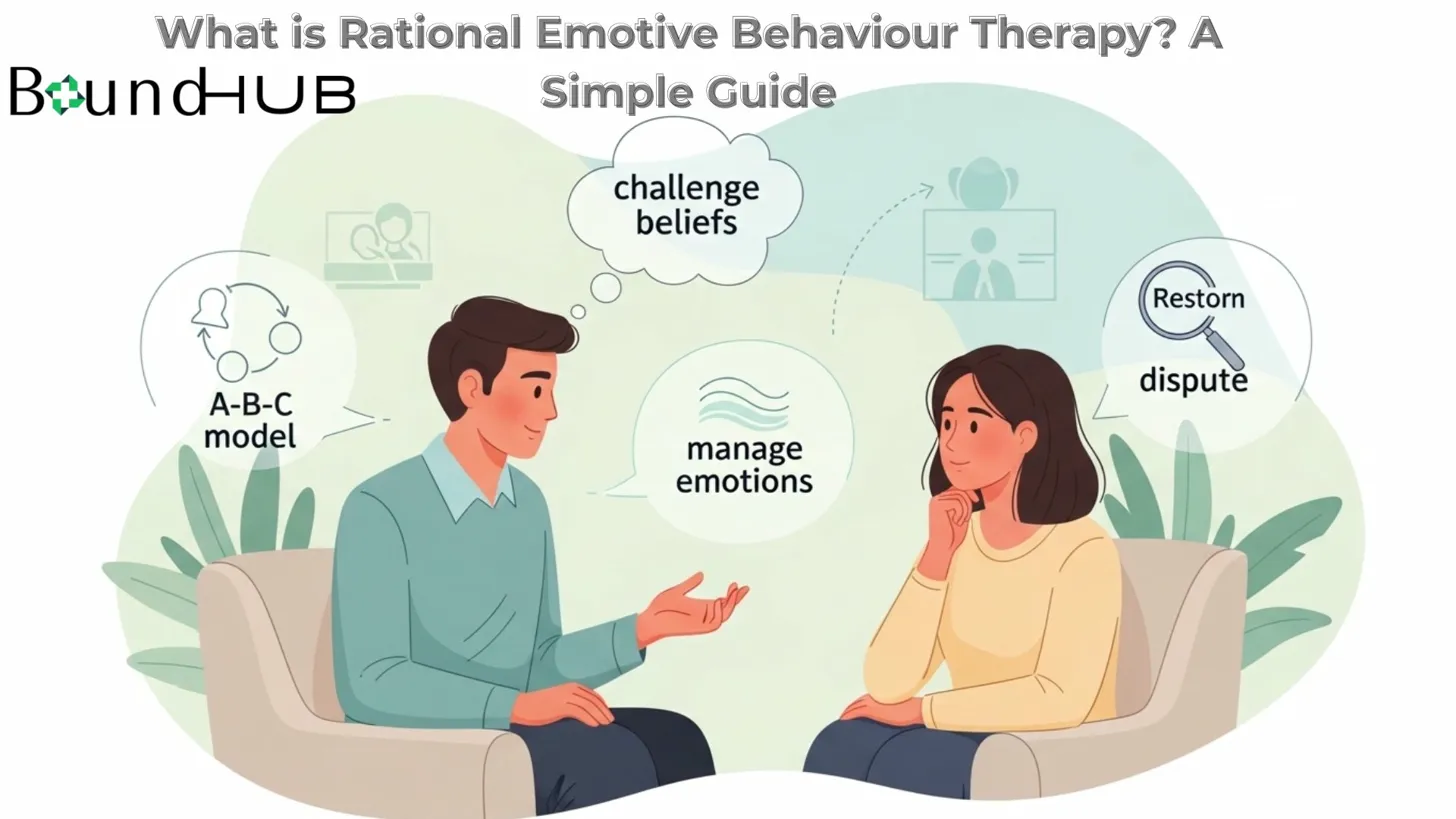
Life may be harsh and sometimes, your mind may seem to be against you. The idea of failure, self-doubt, anxiety may be overwhelming. However, what in case there existed a possibility to address these thoughts and feelings directly, to render them weaker and easier to handle? This is where Rational Emotive Behaviour Therapy (REBT) can be used. Rational Emotive Behaviour Therapy is an action oriented therapy that assists individuals to question and reform irrational beliefs, feelings and behaviours. This is a simple guide in which we shall dissect the nature of REBT, its functionality, and ways in which it can enhance your mental health.
What is the Rational Emotive Behaviour Therapy (REBT)?
Rational Emotive Behaviour Therapy (REBT) is a type of cognitive-behaviour therapy (CBT) that was developed by a psychologist by the name Albert Ellis during the 1950s. REBT is concerned with recognition and disproving of irrational beliefs which may lead to emotional distress. This is aimed at assisting the individuals to substitute these beliefs with less irrational and realistic beliefs, as a result of which their emotions and behaviors will be healthier.
The main idea behind REBT is that emotional turmoil is not created by external events or situations, but by the manner in which we perceive and react. As an example, when one does something wrong, it is not that failure itself makes one feel bad, but that one thinks that he or she is a bad person or that he or she has to accomplish everything. REBT assists people to question such beliefs and end up having more balanced and realistic emotional reactions.
How REBT Works: The ABC Model
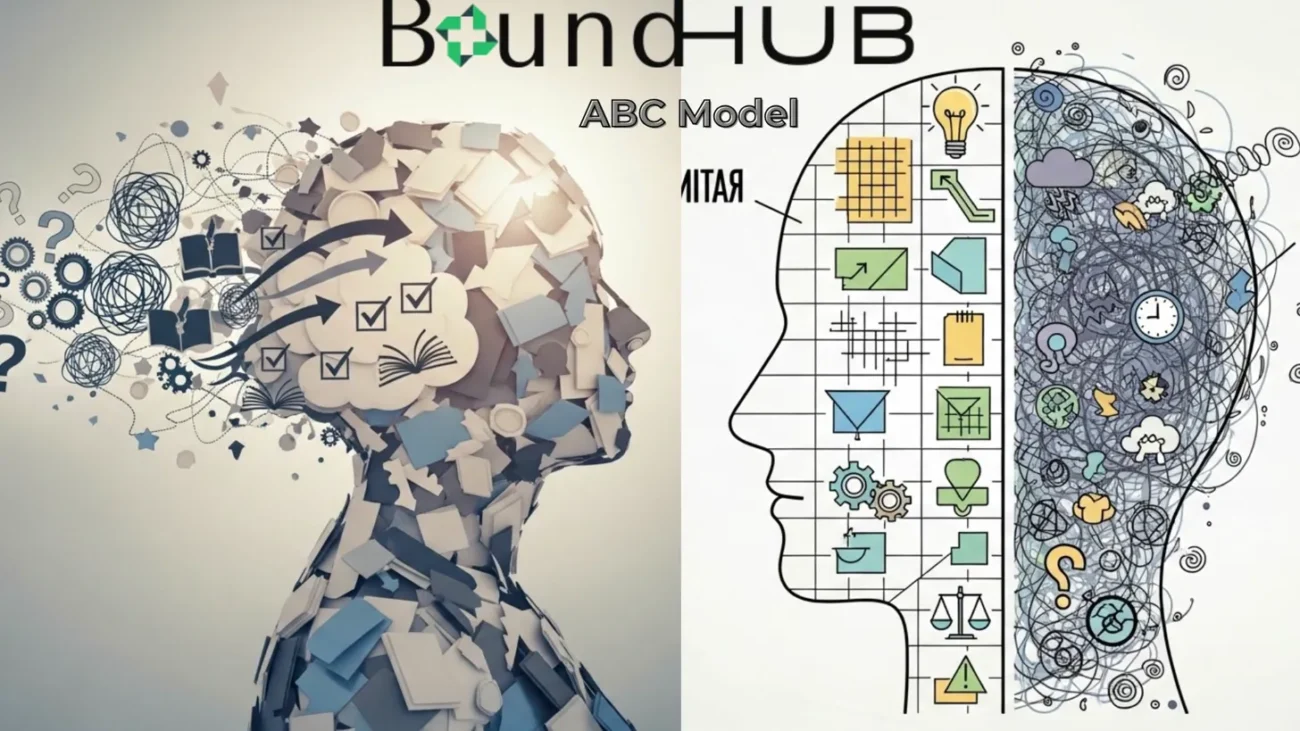
One of the foundational concepts in REBT is the ABC model. This model illustrates the relationship between our thoughts, emotions, and behaviors:
- A – Activating Event: This refers to an external event or situation that triggers a response. For example, receiving negative feedback at work.
- B – Belief: This is how we interpret the activating event. In the case of receiving negative feedback, you might believe, “I’m terrible at my job,” or “I must be perfect to succeed.”
- C – Consequence: These are the emotional and behavioral responses that follow from our beliefs. In this case, believing you’re terrible at your job might lead to feelings of shame, anxiety, or avoidance of future challenges.
The goal of REBT is to change the beliefs (B) by challenging irrational thoughts and replacing them with more rational, healthier ones. By doing so, the consequences (C) change as well, leading to better emotional responses and healthier behaviors.
Common Irrational Beliefs Addressed with REBT
In REBT, irrational beliefs are often characterized by absolutes like “I must,” “I should,” or “I can’t.” These rigid beliefs can cause emotional distress and negatively affect behavior. Here are some common irrational beliefs that REBT targets:
- Perfectionism: Believing you must be perfect in everything you do, or that you’re a failure if you’re not.
- People-pleasing: Feeling like you must be liked or accepted by everyone, leading to anxiety when dealing with conflicts.
- Catastrophizing: Expecting the worst outcome in any situation, even when it’s unlikely.
- Dependency: Believing that your happiness or success is entirely dependent on other people or external circumstances.
Addressing these kinds of beliefs is crucial in helping people achieve emotional freedom and improved mental health. REBT focuses on replacing these irrational beliefs with more realistic, flexible, and healthier alternatives.
The Rationalizing Emotive Behaviour Therapy Techniques
REBT incorporates various practical approaches in order to make people identify and alter irrational beliefs. The following are some of the most widely employed techniques:
- Disputation
One of the techniques in REBT is disputation. It is a questioning and challenging of irrational beliefs. An example is given whereby a person thinks that he or she has to be liked at all times, a therapist may enquire, Would it be realistic to think that all people will always like you? By disagreeing, people get to know how to dispute their unhealthy beliefs and substitute them with more sensible beliefs.
- Cognitive Restructuring
The procedure under this technique includes the detection of negative thought patterns and substituting them with more balanced and realistic thoughts. Such as, rather than saying, I made a mistake, and I am worthless, you could restructure it, and say something like, I made a mistake and that does not make me worthless. I can learn from it.”
- Behavioral Experiments
These experiments entail experimenting beliefs in real life situations. As an example; when one feels that one will be rebuffed, when he/she claims to assert himself/herself, he/she can be advised to attempt to defend himself/herself at a small scale to determine whether that assumption is accurate or otherwise.
- Relaxation Techniques and Mindfulness.
Despite the fact that REBT is primarily cognitive, emotional regulation is vital. Meditation, deep breathing and guided imagery are some of the techniques that enable people to cope with stress and anxiety to the extent they dispense their irrationality.
Some of the conditions that REBT can assist in
REBT has proven to be useful in diverse mental health problems and conditions. REBT is applicable in solving some of the most frequent issues such as:
Anxiety and stress: REBT can render excessive worry and anxiety through altered irrational thoughts and beliefs.
Depression: REBT enables one to deal with negative self-talk and self-belief, which leads to depression and hopelessness.
Anger management:The REBT trains a person to recognize and reshape the thoughts that results in anger and frustration.
Low self-esteem: REBT is able to increase self-esteem by questioning ideas of inadequacy and self-doubt.
Obsessive-compulsive disorder (OCD): REBT can be used to assist people in dealing with irrational thoughts that drive the obsessive thoughts and compulsive behavior.
Social anxiety: REBT is used to question social interaction beliefs which cause fear and avoidance.
REBT has also been effectively applied in sports psychology to assist athletes to deal with performance anxiety and to eliminate irrational thoughts that are preventing them to perform.
Benefits of Rational Emotive Behavior Therapy
| Benefit | Description |
|---|---|
| Improved emotional regulation | By challenging irrational thoughts, individuals can learn to better manage their emotions. |
| Increased self-awareness | REBT encourages individuals to examine their beliefs and thought patterns, leading to greater self-awareness and understanding. |
| Better decision-making | With a clearer mindset, individuals can make better, more rational decisions in their personal and professional lives. |
| Long-term mental health improvements | REBT teaches practical, lifelong skills for managing thoughts and emotions, leading to lasting improvements in mental health. |
How to Get Started with REBT
When you are thinking of doing REBT, the initial process would be to seek an experienced therapist that specializes in this kind of therapy. REBT is available in person, and online, and so it is worth researching what options would suit you.
The initial engagement with you would most probably be the discussion of your concerns and discovery of the activating events that are distressing you. Your therapist will assist you in examining what you believe about these things, and start questioning irrational thoughts. REBT is an active therapy, and that is, you will be expected to perform exercises between the sessions to consolidate the lessons.
FAQ’s
Q: Is REBT the same as CBT?
REBT is a type of cognitive-behavioral therapy (CBT), but it focuses more on challenging irrational beliefs and assumptions, while CBT often focuses more broadly on thoughts and behaviors.
Q: How long does REBT therapy take?
The length of therapy depends on the individual and their goals. Some people see improvements in a few sessions, while others may need longer treatment. REBT tends to be shorter-term compared to other therapies.
Q: Can REBT help with anger management?
Yes! REBT is highly effective in helping individuals manage anger by addressing the irrational beliefs that trigger angry reactions.
Conclusion
Rational Emotive Behaviour Therapy (REBT) is a successful and practical mentality treatment method that assists individuals to confront irrational beliefs and perceptions. REBT provides an effective means of stress, anxiety, and depression management and other emotional difficulties by applying such techniques as disputation, cognitive restructuring, and mindfulness. You may have certain mental health issues or just want to feel better about your emotional state, in any case, REBT can assist you in becoming more in control of your mind and leading a better and more fulfilling life.